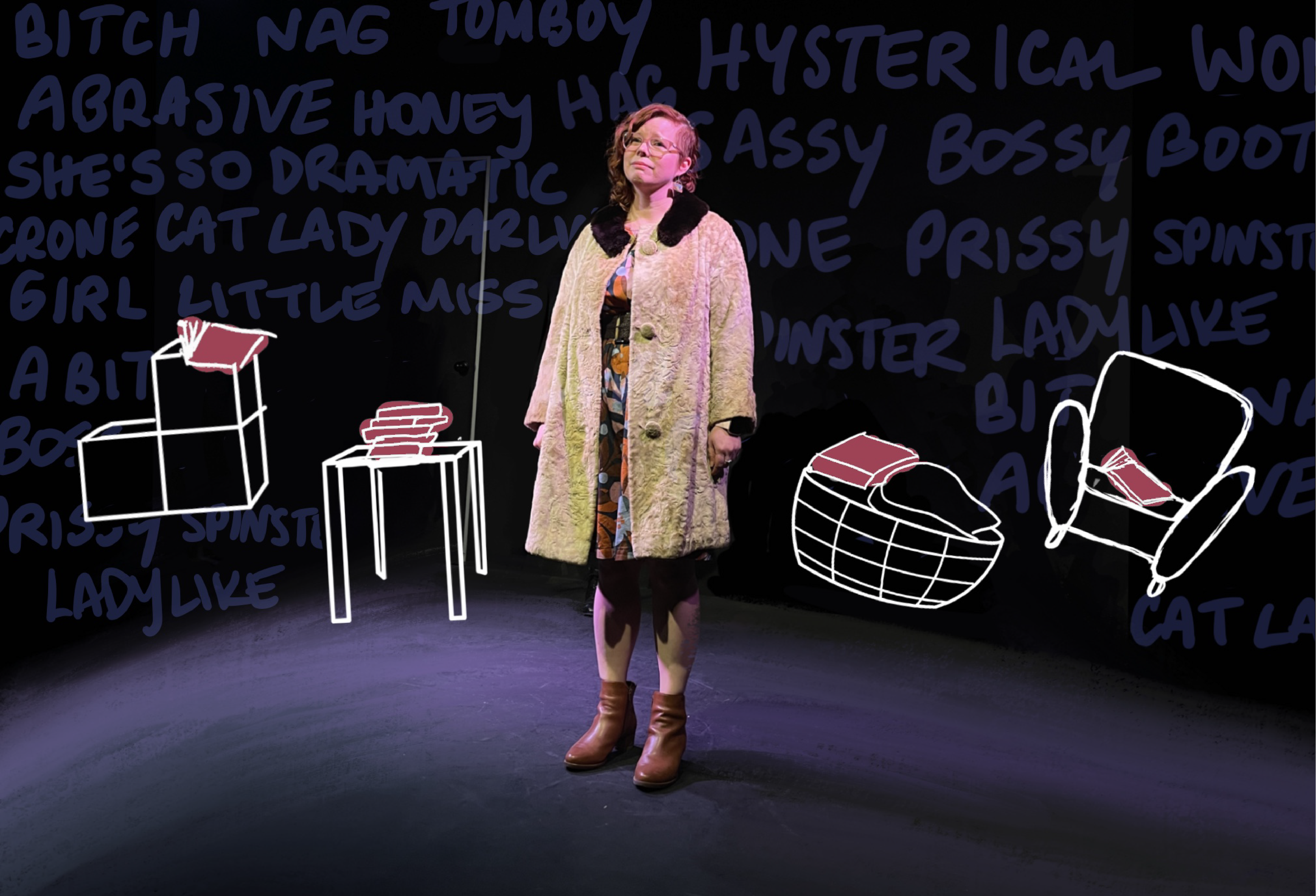
Review: A Bit Dramatic
This show was incredibly popular and got reviewed multiple times during the Improv Fest! Check out a variety of those reviews below.
-
Reviewed by Thalia Kehoe Rowden
In an intense, moving 60-minute show, the cast of four take inspiration from real-life journal entries – unseen until the performance – and invent and explore the lives of three different women, over a span of years, through childhood, adolescence, and womanhood.
Sticks and stones, they say, are the things to worry about, but as the cast makes clear, the words people slap on us can bite deep, and stay with us.
There’s the newly minted PhD, Dr Talbot (played by Liz Talbot), who is worried about keeping her name if she marries her ambivalently-supportive partner (Mark Grimes). His habit of telling ‘funny’ dinner party anecdotes with her as the butt puts us firmly in her corner from the first scene, and her earnest encounter with a blithely clueless student is absolutely hilarious.
Then there’s a party girl who hasn’t quite grown up (played by Noelle Greenwood), still out hooking up with random guys on Wednesday nights, but what might her mum have said to her if she were still alive? We’re all quietly delighted when she finds her path.
In the third story, Caitlin McGrath’s character finds that lockdown sourdough
experiments bring a new dimension to her quiet life, and so does the surprisingly vulnerable plumber who appreciates her specialist knowledge of tools. She has been haunted by hurtful friendships, but eventually shucks off the labels that have stuck to her.
The combination of genuine journals and fictional imaginings really works, and gives extra dimension to the stories. The detail and nuance in the stories, improvised on the night, were impressive and absorbing. The cast are all excellent, playing multiple characters in each other’s stories, and
chiming in as a chorus from the shadows during the journal reading. The minimalist staging is thoughtful, and there’s a pianist providing another layer of emotion in the background.
Audience members choose which journals the cast will read from each night, so each show will unfold in a unique way. But the cast’s creations provide so many different entry points that the shows will find space in the hearts of a broad audience. In particular, it’s great to see women’s ordinary stories centred in the show, and to have such skilled improvisers explore the gendered subtleties of how we see ourselves and each other.
Reviewed by Ciarán Searle
Laid out on chairs and boxes as we enter are a selection of journals, the inspiration for the scenes we are about to witness. An email sent out to the audience a few days before asked for journal entries that could be incorporated into the show. Brisbane based improvisers Noelle Greenwood, Liz Talbot, Caitlin McGrath and Mark Grimes take to the stage, with Liz sitting to read the first entry.
As the reading continues, the improviser settles into the character, and it feels quite voyeuristic to hear the innermost thoughts of what we know is a real person sitting amongst us. She speaks of constantly second guessing herself, questioning whether her inability to find humour in the offensive things that her crush says is her own failing. In a manner that will be echoed across the three stories we hear the snide comments and labels of possible people in this character’s life, like ghosts or memories from the other improvisers.
It is very clear to see the trust and experience between the players as they push against the focal characters, reinforcing their self-doubts and insecurities. Caitlin plays a demanding, male university student, constantly questioning and dismantling the confidence of Liz’s professor character.
In our second story, we see Noelle take on the role of a party girl on something of a knife’s edge, The supportive, though not quite understanding relationship with her father, played by Mark (who plays a variety of allies and villains to our female focus characters throughout) is particularly heartwarming.
Each relationship is played to highlight its complexity- there is bad with the good, and good with the bad. The improvisers’ emotive performances read as genuine, and some real tears are shed. The human stories that we are invited into resonate for performers and audience alike.
Ultimately, though, these stories are hopeful. In the closing monologues, each performer is surrounded by the others as they share the perspective gained through age. We see that abusive relationships have been left, that running a bakery has been tough, but fulfilling, and that a woman feels able to advise and support her daughter through the lessons she has learned.
This is an improv show with a clear message about the resilience of women, and its earnest exploration of these themes is a rare and wonderful thing for an artform often seen as nothing but late-night gags.