A ginterview with the mothers of Mothers Ruined
Full disclosure: I have worked with the Mothers on Boom Gin – a collaboration with my ethical clothing company, which is funding a scholarship to the weekend for fat babes that I run. Even if I hadn’t done that though, I would still think they are very cool and interesting people who make delicious products which more Wellingtonians should know more about.
Hello! Obviously I know a fair bit about you both from our work together, but the wider Wellingtonista audience may not. So tell us, who are you? How did Mothers Ruined Gin get started? Whose idea was it to make gin? How did you decide to go into business together?
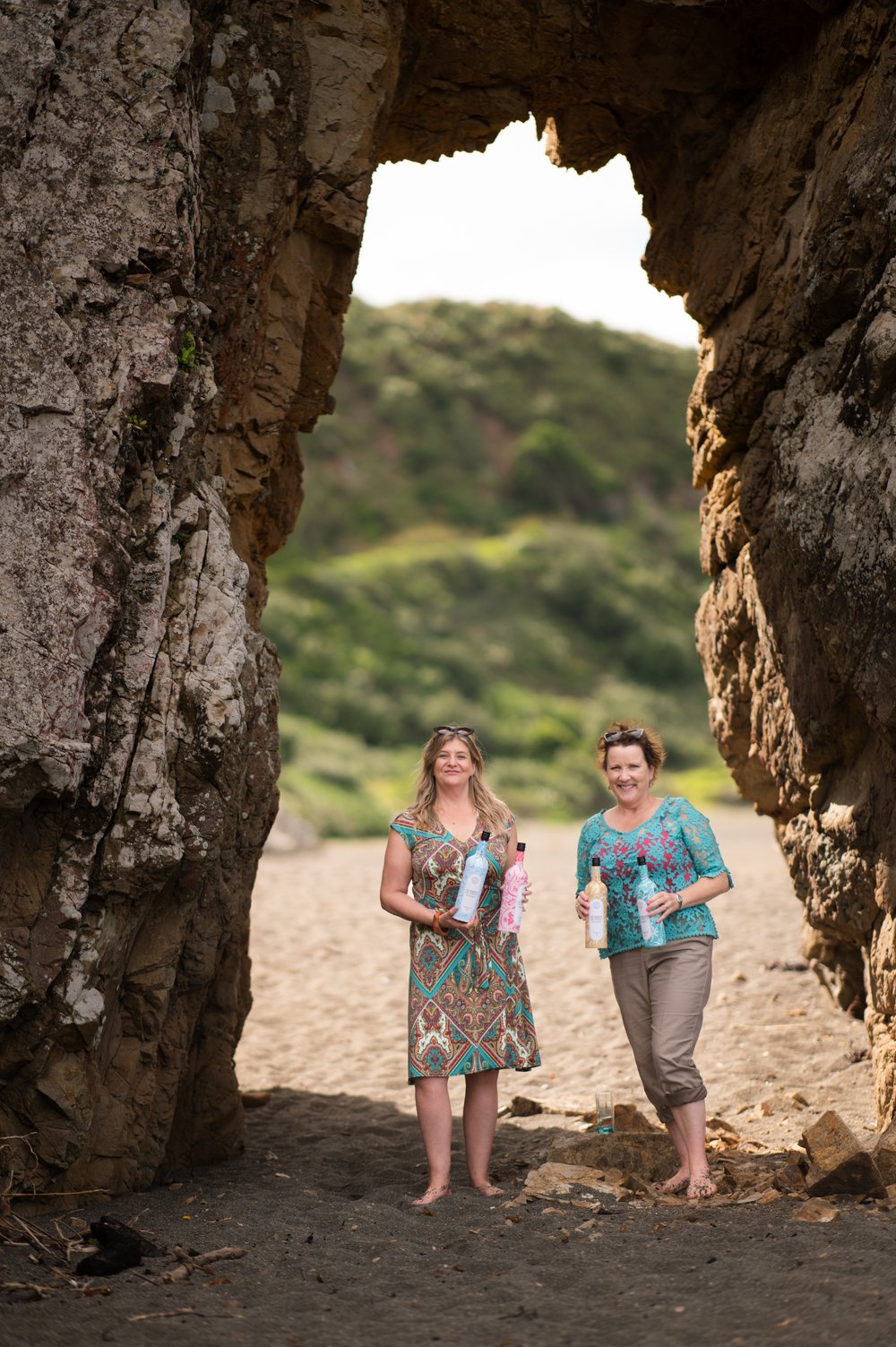
Jo: Mothers Ruined has a long and winding origin story, because Helen and I have known each other for over 30 years – we met in Wales in 1993, when we both started studying marine biology. We were lab partners and we flatted together with other friends for two years, so we were party partners too. Fast forward to the mid-2000s and we’d both emigrated to Wellington, where while we worked and raised our families, we still managed to spend lots of time together because we both became members of Wellington’s pre-eminent paranormal investigation group (Strange Occurrences). (Editor note: Jo even wrote a book – Spooked – Exploring the Paranormal in New Zealand
by Dr Jo Davy & James Gilberd – so you could say she’s been involved in spirits for a loooooooooong time)
Then, during a small window of near-normality during lockdowns in 2021, we went to an event where we were able to try distilling gin. A name came to mind, we remembered our laboratory background, we both decided an adventure was in order, and so then, many (many!) forms later, we found ourselves at the helm of our own gin business.
Tell us about your gins. What makes the actual gin (see next question) of Mothers Ruined special?
Our gins are no shrinking violets. They are all boldly flavoured, and most of them are boldly coloured. We don’t like gins where, once the mixer is added, the gin is lost. So we set out to create gins that would be a bit of an event and, because drinking in moderation is the type of drinking we like best, which means someone can enjoy one really stonking gin-based drink.
A key difference for your gin – even for people who don’t know much about gin – is your paper bottles. Why did you go down that route?
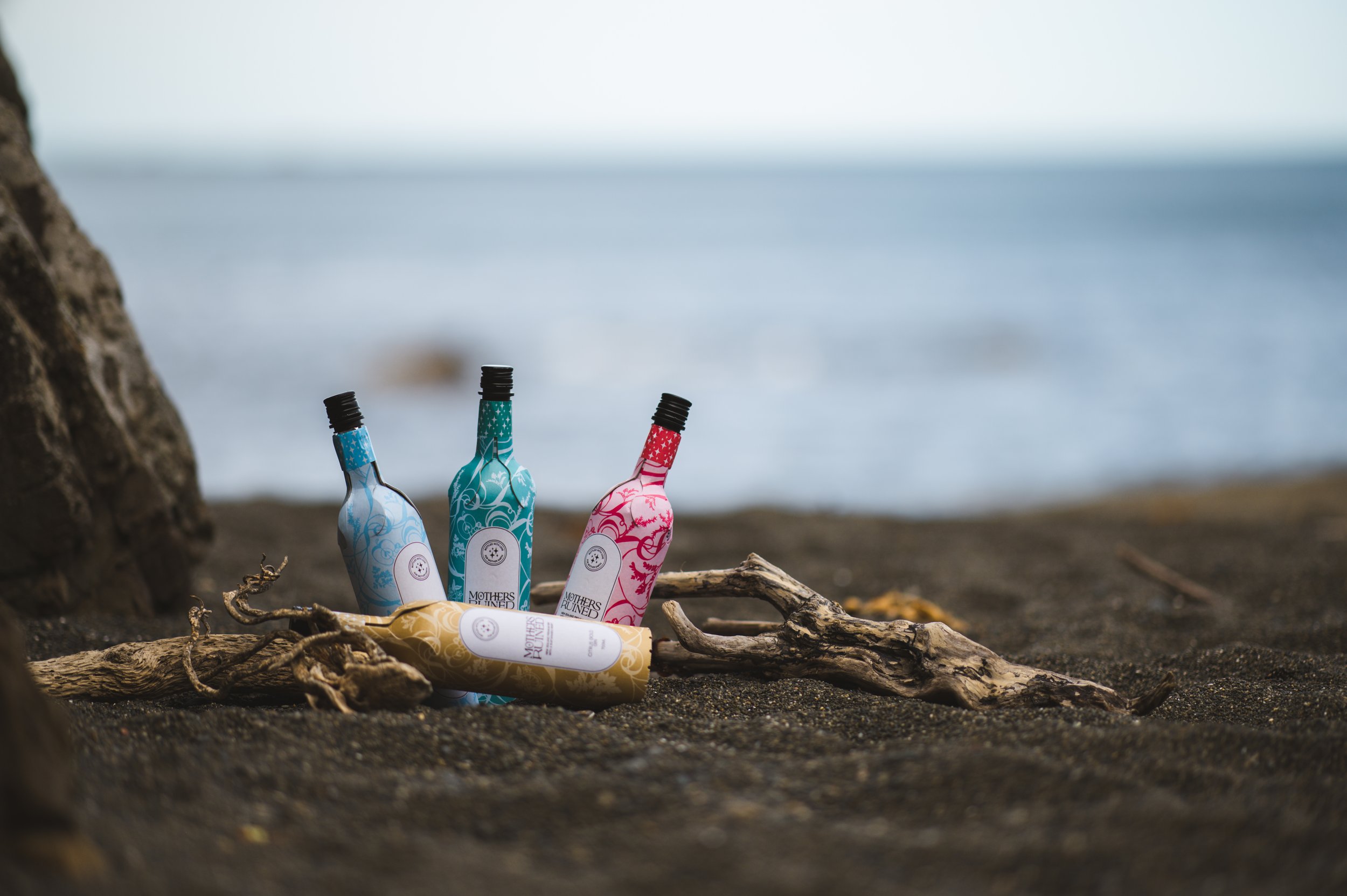
When we started to look at our options for sourcing bottles, we were surprised to discover that the majority of spirits bottles are sourced from Europe or China, and that the energy and water requirements to both produce and recycle glass are very high. We became aware of a new UK innovation, the Frugal Bottle, and once we realised that this recycled paperboard option existed, there really was no other option for us. It uses four times less water to produce, has a carbon footprint that is up to six times lower (when produced locally, as we hope they will be, in time) and is five times lighter than an equivalent glass bottle. It’s not a perfect solution, but it’s a lot better.
What’s the best thing about being gin makers?
Our motto is to Be Kind, Have Fun, Make Gin, and when we are in the distillery, deep in the process of creating a new recipe or distilling one of our current gins, we really are in our happy place. But when we’ve been at events around the country in this first year of being in business, we’ve been getting a real buzz about the reaction to our story, the gin, and the bottle itself.
What changes would you like to see in the spirits industry?
It would be great to see more people willing to take a risk with alternative packaging – we know that ours isn’t the only option – but some of the alternatives would be more likely to be adopted by producers if the reuse/recycle infrastructure in this country was better, so that’s something that’s bigger than just the spirits industry.
It would also be great if there was a little more acknowledgment by the industry that back in the day, it was usually women who were the distillers. In fact, we’ll soon be starting to share information on our website and socials about the history of women in gin, gathered by our good friend and historian Amanda McVitty.
As mothers, you probably pretend you don’t have favourite children, but which of your gins is your favourite?
It really does depend on the day, but if I was doing ‘Desert Island Gin’ and had to choose just one to save, it would have to be Original Gin (Jo). Helen has a very soft spot for Fruity Ruby.
Now you’ve collaborated with Wellington’s best ethical clothing label for fat babes, what would your next dream local collaboration be?
Our gins are very suited to cocktails, being so very bold, flavourful and colourful, so we’d love to do a series with one of the many superb cocktail venues in the city, like Nightflower or Hawthorn Lounge.
Jo – you deliver a lot of the gins via bike! What’s your favourite bike route in Wellington?
Undoubtedly the ride along the South Coast, from Island Bay to Breaker Bay! Whatever the weather, the light and water are always amazing.
What’s the best licensed place to drink gin in Wellington? And as an obvious follow up: what’s the best place for a Mothers Ruined gin picnic?
The Sprig & Fern taverns have been great supporters of MRG, so we’d encourage Wellingtonians to pop in to one of them to enjoy one of our gins! And it’s hard to go past Breaker Bay as a fabulous gin picnic spot.
And finally, what’s one thing that could improve Wellington enormously?
Oooh, that’s a gnarly question! Tempting to say that having all the water leaks fixed would be terrific, but let’s go with installation of bus stops with living roofs. Get them buzzing with pollinator-friendly plants!