Ten Years in Pōneke: Part Five – Somes Speedrunning
Or, hey I was supposed to finish all of these articles in 2025 but then life happened so I guess we’re doing little quests in 2026 as well.
[Warning: This piece talks about disease, war and death.]
Matiu / Somes Island is the ever-present spectre looming in Te-Whanganui-a-Tara, one of three islands that the harbour cradles gently within its grasp, and I’ve been meaning to go out there literally ever since I first arrived in the city.
Eleven years later, I finally stopped putting it off.
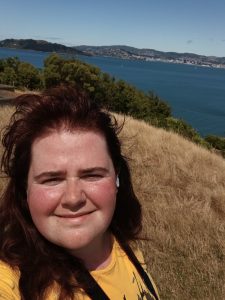
In 2025 (and 2026, it seems), I’m doing ten things to celebrate living in Pōneke for ten years. There’ll be stories. Pics. Nonsense. Check out the series here.
Matiu has a storied history.
Used as a refuge by pre-Colonial Māori, then acting as a quarantine station for travelers coming into Wellington, as well as an internment camp in both World Wars, the history (both its highlights and its darkness) is palpable the moment you step foot onto the island.
I’d be here all day if I wrote about its many stories, but I do recommend checking out David McGill’s Island of Secrets, and Paddy Richardson’s By the Green of the Spring for more.
The trip to the island isn’t so complicated. Get on the East-by-West ferry down by Master Kong on the Wellington waterfront, drift along on the gentle (or white-capped) waves for 50 minutes as the boat goes to Days Bay to pick up more passengers, and then disembark onto the island after doing a quick quarantine check (as a reserve, DOC doesn’t want foreign ants, seeds or similar on the island, for obvious reasons).
Then, the island is yours to explore. Depending on ferry schedules, you get 1.5–3 hours to wander about at your leisure.

As I’m me and I fundamentally can’t be chill, I used that 1.5 hours to speedrun the entire island, pick up 14 geocaches* and absorb as much information as I could.
The night before, I planned out my route, ensuring I would double back as little as possible. The island isn’t that big, but it is a bit up and down, and I wanted to ensure I had enough time at each spot before I moved onto the next. Route came out to just under 3km, I landed on the island at 10.30 with a deadline of 12.15, and we were off.
First it was off to the easternmost point on the trip, the site of the island’s former degaussing station.
In the Second World War, German forces laid magnetic mines across the entrances of several harbours in Aotearoa – even managing to sink the infamous ship, the RMS Niagara – in Auckland Harbour. As a fun fact, most of the mines in Wellington Harbour haven’t been found. When a ship was degaussed, it became ‘invisible’ to the magnetic mines, and allowed safe passage into the harbour. This process was conducted on Matiu / Somes, by the Wrens.
These days, there’s not much left at the site of the degaussing station, but it’s still a fascinating place to stop off – I definitely didn’t know about Pōneke’s mine-based history, and I will be thinking about the ammo dumps in Wellington Harbour next time I get on a ferry.
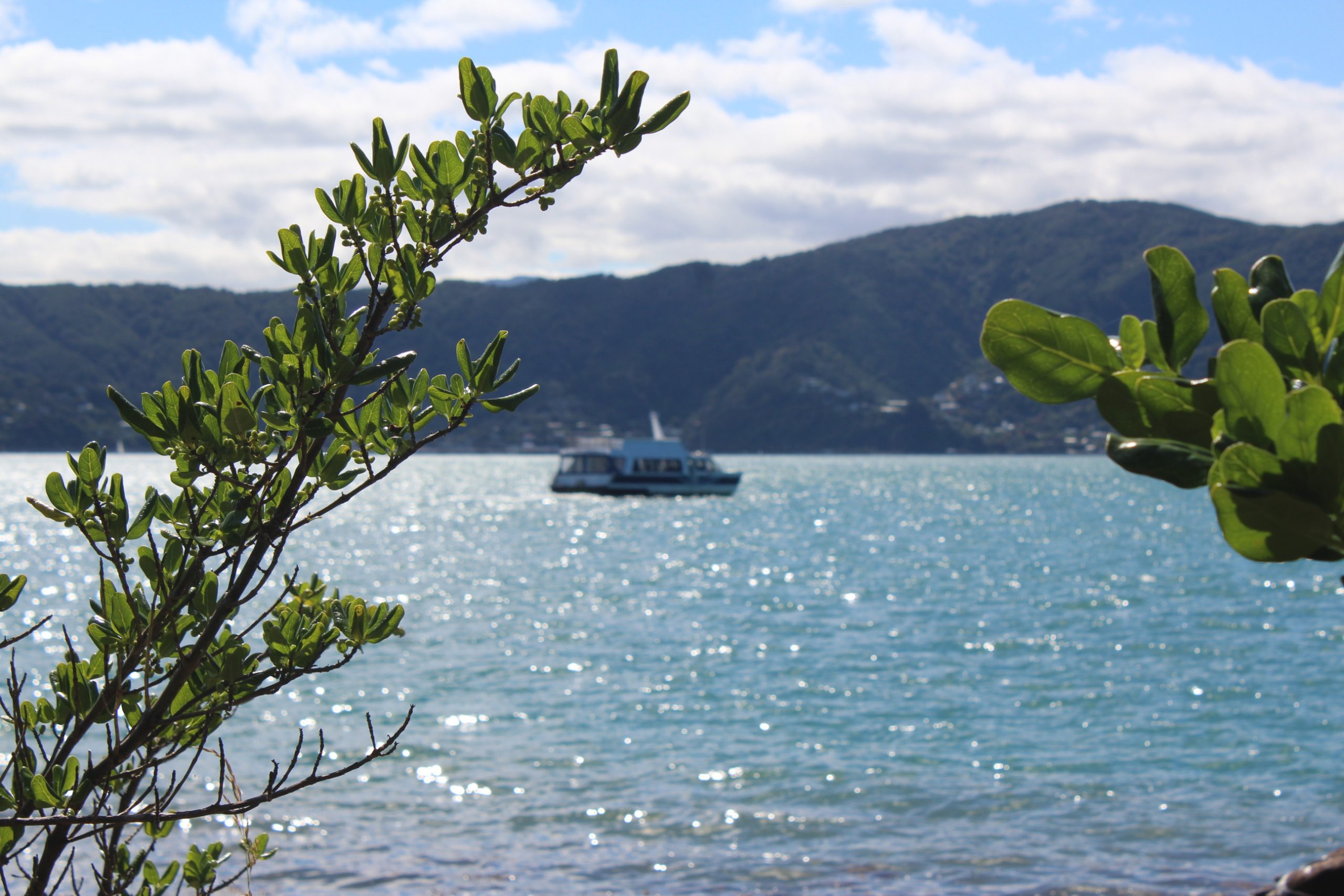
Two digital caches safely figured out, I headed back towards the docks and up to the northernmost point of the island, collecting glorious views across to Ngauranga and Petone, before turning south again.
My next stop found me at the memorial cairn.
From 1872, when the immigrant ship ‘England’ arrived with several cases of smallpox on board, Matiu / Somes acted as a quarantine station for those coming into Wellington, both humans and animals; though the island wasn’t used for human quarantine after World War One.
The memorial cairn was placed in the 1970s to remember those buried on the island.
In some places the history is palpable, and on Matiu / Somes it is especially so. Wooden buildings marked with names of animals, cracked concrete splintered through with weeds, and a memorial where the youngest name on it was barely a day old.
Some places are rife with ghosts.
The sadness in some parts of the island is all-encompassing. Though quarantine was more than necessary, the shortcomings – and by extension cruelty – of historical medicine feels staggering.
Smallpox was, and is a horrifying disease.**
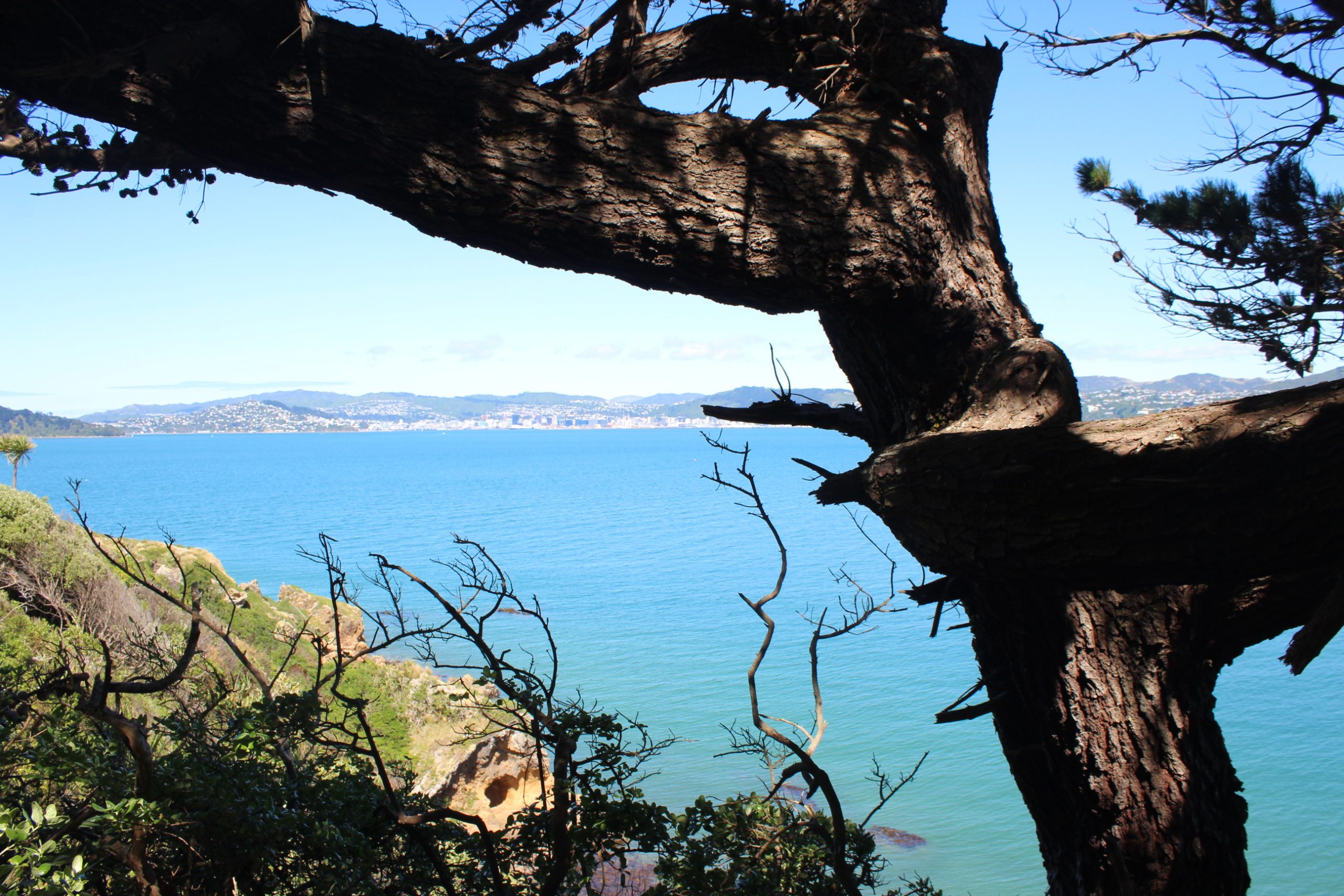
I sprinkled my hands and head in water and moved south, following the winding trail, which spat me out at a lookout, before I followed the trail east to the island’s lighthouse, collecting both physical and digital geocaches along the way.
I’m a big fan of lighthouses; my life’s goal is unironically to become a lighthouse keeper, but there’s not a huge amount of them that are accessible to get to in Pōneke. The ones out at Pencarrow are accessible, they’re just interminably dull to travel to, unless you’re a big fan of gravel roads.
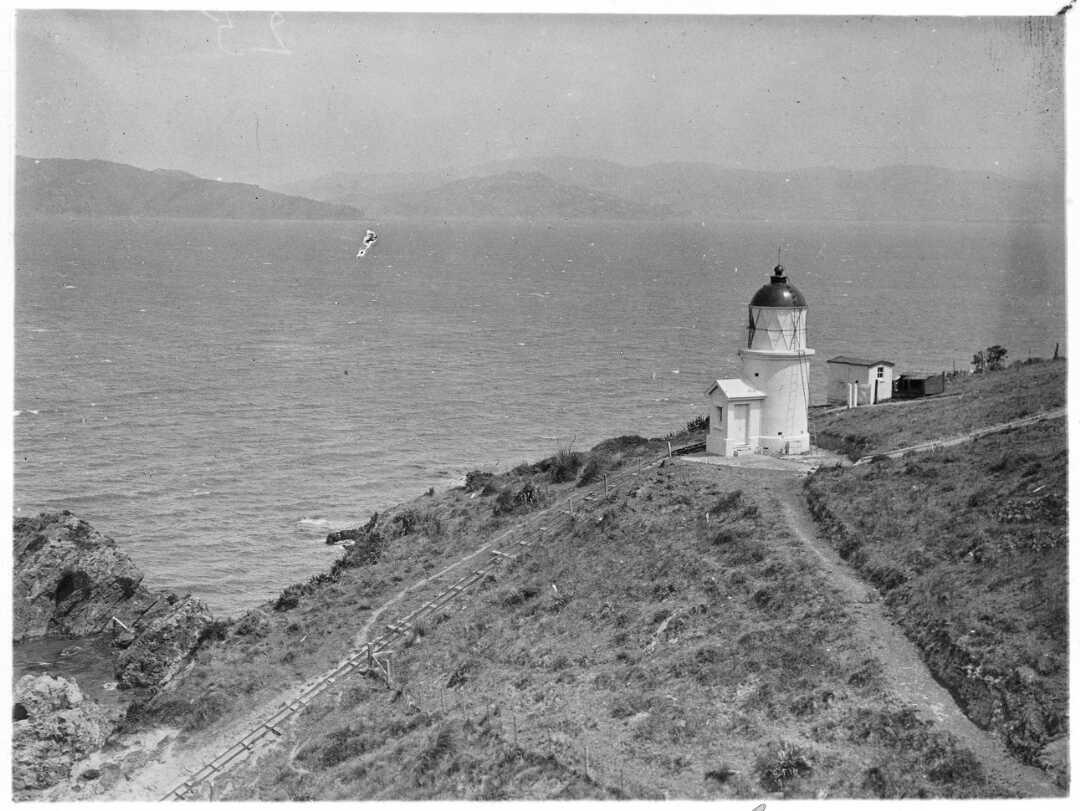
This lighthouse is still active, actually. Operated by a keeper from 1866 to 1924, it’s now automated and helps guide ships into Wellington Harbour.
A tramway (pictured below) helped bring goods from the beach up to the lighthouse, and is inaccessible these days – to my disappointment, I adore heritage rail.
Having been pressed against the lighthouse for arguably too many minutes as other people took photos, I scampered away up the hill and up the steepest part of the island to the summit and large anti-aircraft battery on top of it.
These gun emplacements and the nearby command post were built during the Second World War, but much like Wrights Hill Fortress across the harbour, these guns were never fired against an enemy.
As I struggled to reach a geocache at the trig on the summit – much to my chagrin, I continue to only be five foot seven – I shot some pictures for another traveler of them in front of the glorious view and then slid down the hill on my butt on the long dry grass towards the collection of buildings clinging to the hilltop.
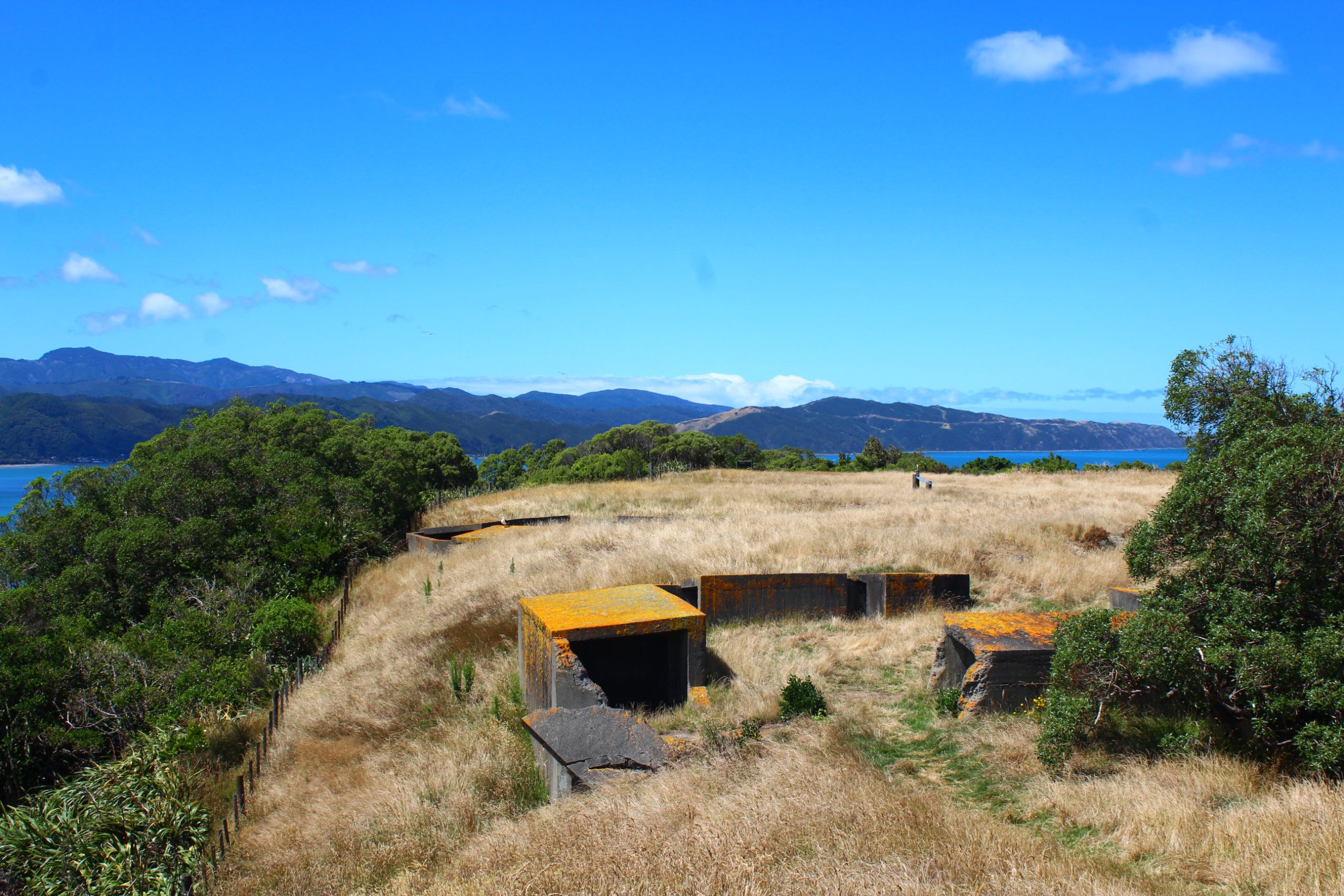
These days, Matiu / Somes is a conservation area, having become a reserve for native plants, birds, reptiles and invertebrates including tuatara, kakariki, North Island robin, little blue penguins and wētā.
Historically, these buildings acted as quarantine zones and internment camps. It was surreal to reach the bottom of the hilly slope and come out amongst buildings that had seen so much in the past; to wander through the bumpy terrain and stare off at the former internment barracks*** and animal quarantine barns, ancient weatherboard buildings peeling at the seams.
Eerie. Confronting. An odd place to linger.
Finding more geocaches, I slipped off down towards the wharf again, to eat a muffin and sit in the sun until the Ika Rere showed up to ferry us all back to the city, me at least forever changed.
Matiu / Somes is a deeply strange place. Tranquil in moments, but hard to escape. My thoughts frequent the island now I’ve learned of some of its secrets. Maybe yours will too.
*If you’re a geocacher, you might note there’s not 14+ geocaches on Matiu / Somes – and to that I say – check your AdLabs, there’s another ten in there.
**Matiu / Somes wasn’t just a quarantine zone for smallpox, but for a lot of diseases. One of the most tragic cases is of Kim Lee, who was exiled to “Leper Island” (Mokopuna Island, off Matiu / Somes’ north tip), due fears of leprosy (and likely racial bias.)
I have an interest in epidemiology, and one of the best books I’ve ever read about smallpox is Richard Preston’s The Demon in the Freezer, detailing smallpox and anthrax as biological agents. I’d recommend reading it, but it is harrowing. Also, the phrasing ‘is’ was used as although smallpox is technically eradicated, it still exists in some forms within labs in the world.
***Matiu / Somes Island’s internment history is covered in Paddy Richardson’s novel By The Green of the Spring.